Why 3000K Warm White Light Improves Sleep Quality vs Blue Light
The Wavelength Spectrum and Melatonin Production

Exposure to light after dark directly influences the brain's pineal gland, which regulates melatonin—the body's natural sleep hormone. Short blue wavelengths (450–480nm) trick the brain into assuming it is daylight, suppressing melatonin secretion. In contrast, longer wavelengths found in warm white lighting have a minimal impact on hormone levels.
Understanding how light temperature works is central to the main guide, which explores lighting strategies for restorative rest.
Why 3000K is the Sweet Spot for Nighttime Lighting

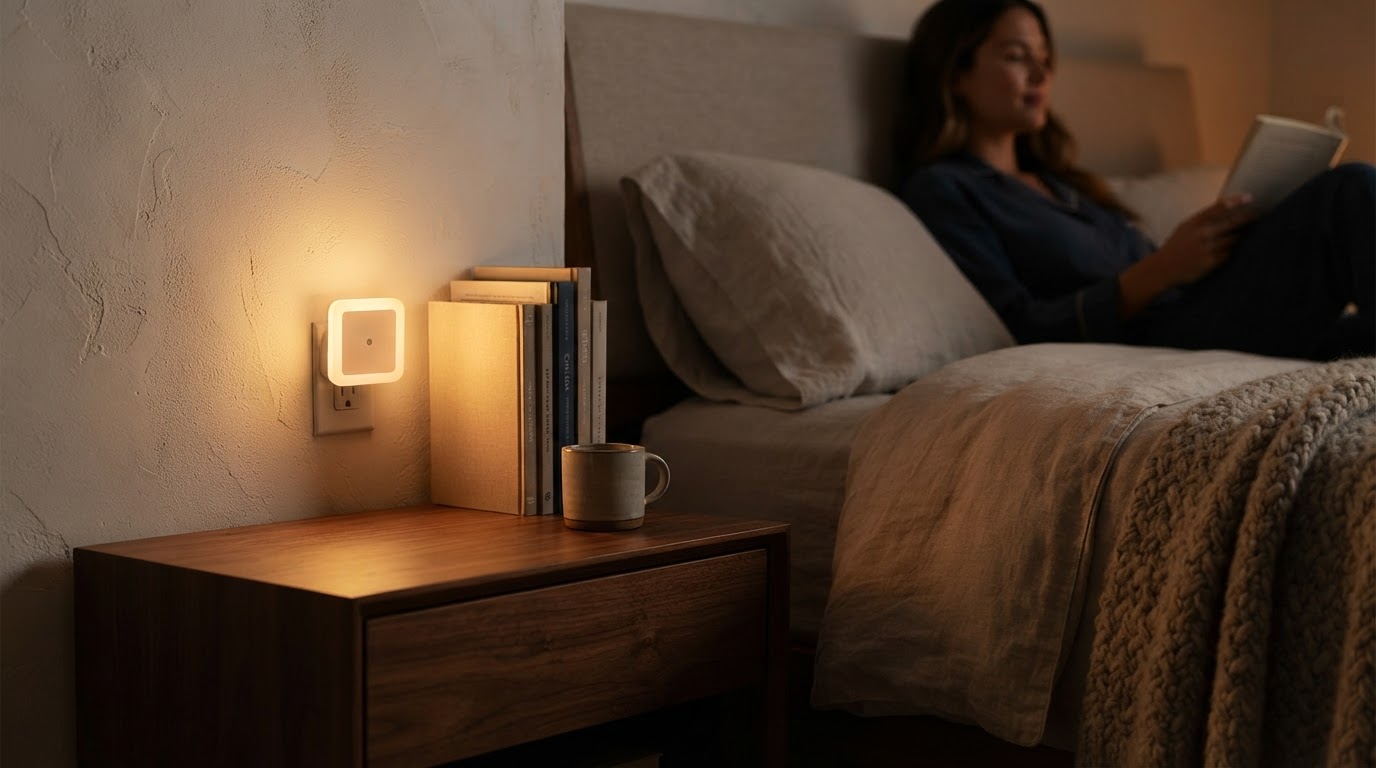
A 3000k warm white Light provides an ideal balance between functional visibility and circadian safety. Emitting a gentle light at 50 lumen, this color temperature creates a cozy atmosphere in bedrooms and hallways. Unlike harsh 6000K daylight bulbs, 3000K lighting produces lower blue spectrum intensity, allowing your nervous system to stay relaxed during late-night hours.
Preventing Nighttime Circadian Disruption
Switching to 3000K lighting in high-traffic evening areas helps bridge the transition between daytime activity and nighttime sleep. When you use low-wattage devices, such as a 0.5 watts night light, you achieve sufficient illumination to navigate safely without alerting your brain's waking mechanisms. Selecting gentle warm lighting ensures your internal clock remains steady all night long.
Read the full guide: The Complete Guide to How Warm White Light Impacts Sleep Quality