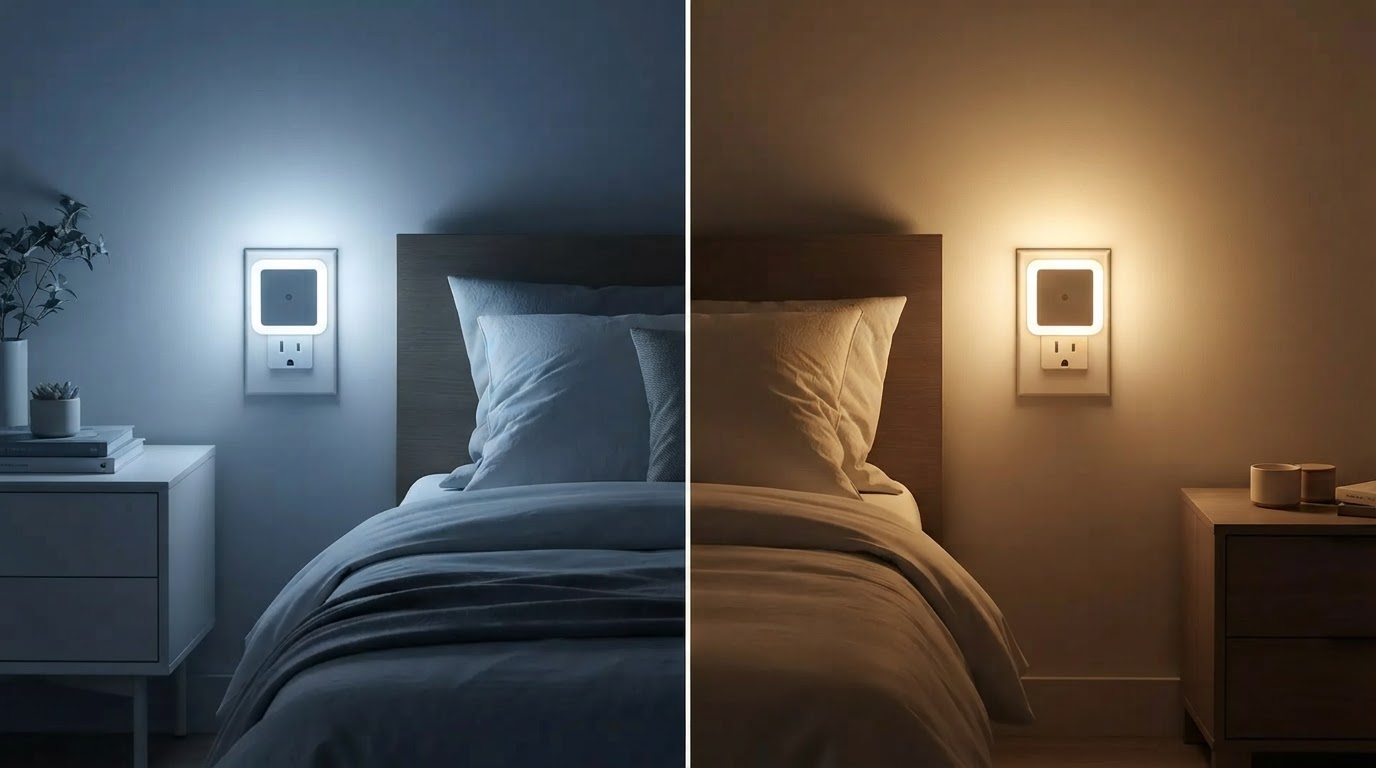
Blue Light vs Warm White Night Lights: Which Is Better for Evening Use?
Blue Light vs Warm White Night Lights: Which Is Better for Evening Use?
Choosing the right ambient night light involves understanding how different spectral wavelengths affect human physiology and nighttime vision. Below is a comparison between standard blue-enriched lights and 3000K warm white solutions.
Wavelength and Melatonin Impact
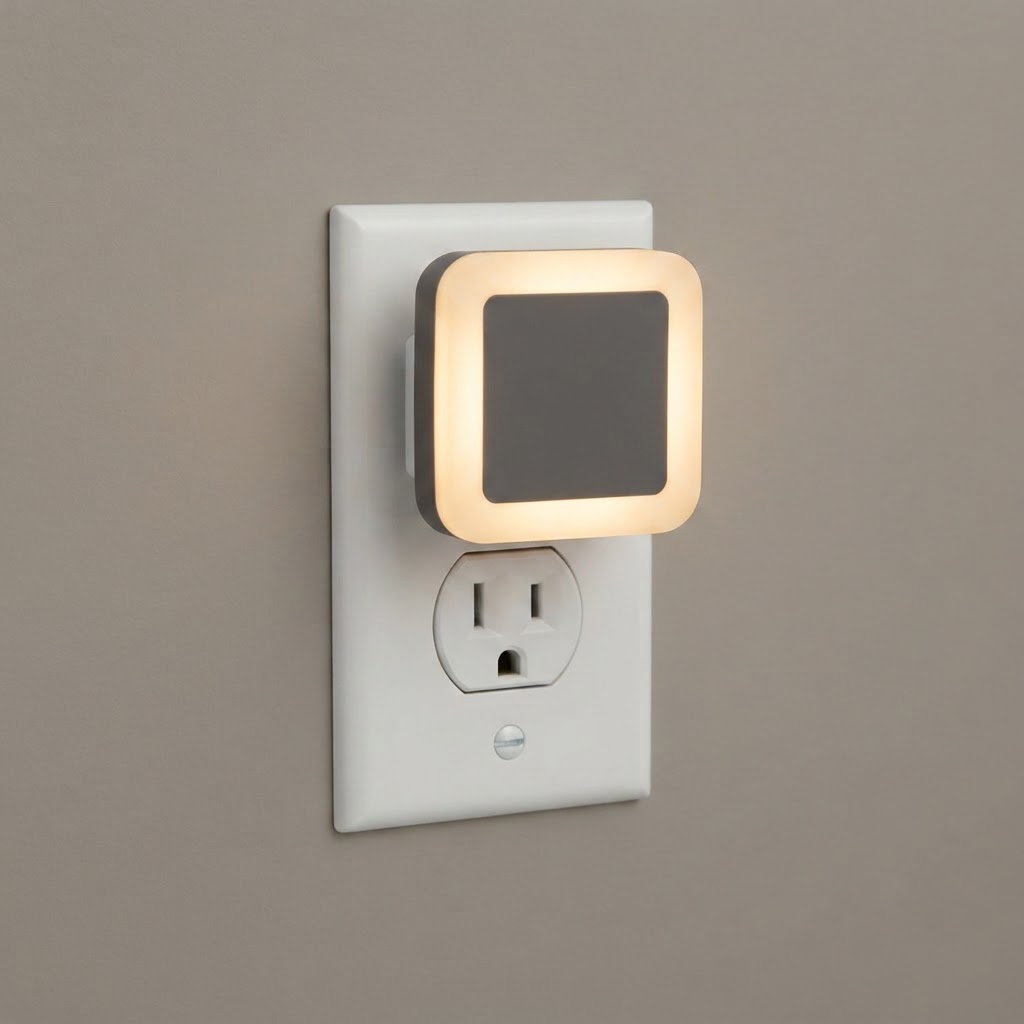
Blue light fixtures emit short wavelengths (400-490 nm) that stimulate intrinsically photosensitive retinal ganglion cells (ipRGCs). This stimulation signals the brain that it is daytime, suppressing melatonin and raising heart rate.
3000K warm white light shifts energy into longer yellow-red wavelengths. This warmer profile keeps melatonin suppression down to an estimated estimated [melatonin suppression rate]. For a deeper dive into spectral science, read [the main guide].
Visual Comfort and Glare
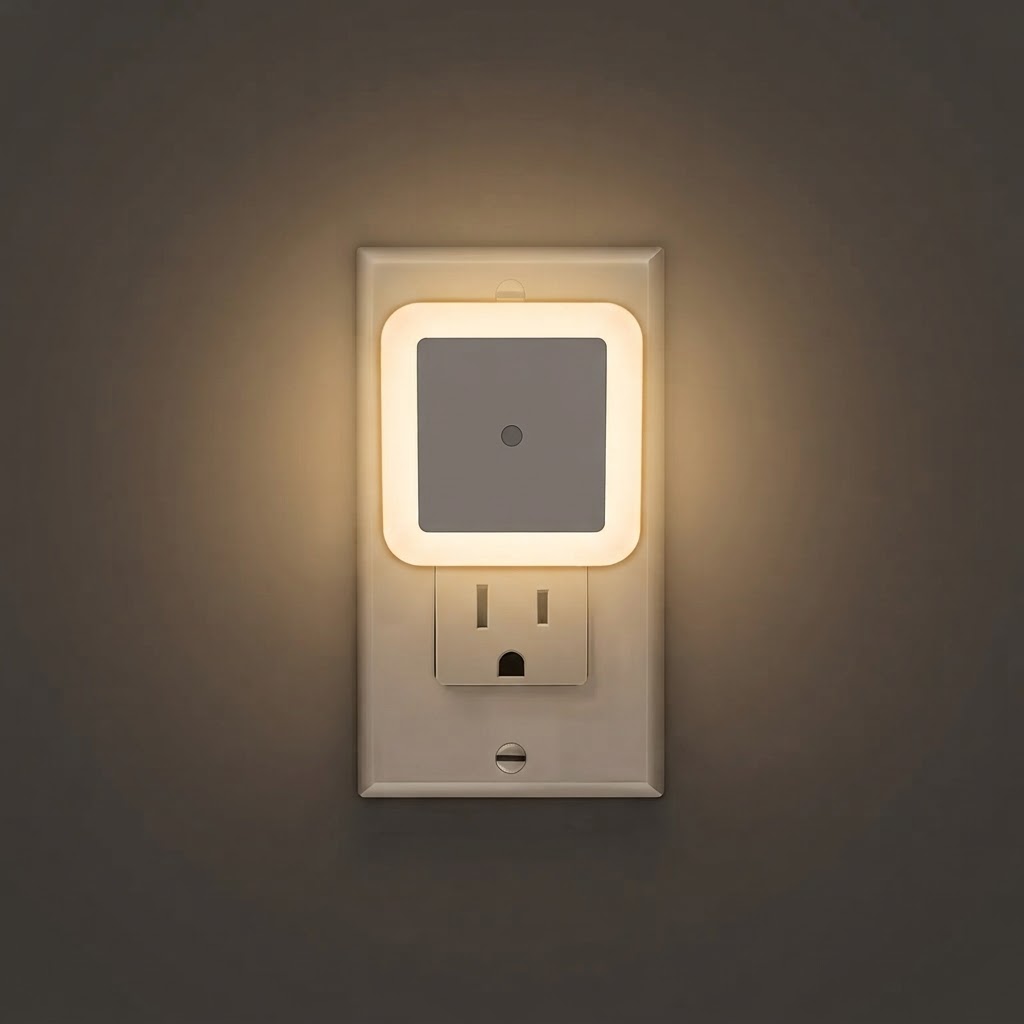
- Blue Light: Causes visual scatter and glare when eyes are dark-adapted, making it uncomfortable during late-night bathroom visits.
- Warm White Light: Provides high color contrast and low visual glare, allowing comfortable spatial perception at 50 lumens.
Practical Energy and Usability Features
| Feature | Cool/Blue Light Units | 3000K Warm White Units (Soft Glow Nights) | |---|---|---| | Color Temp | 5000K - 6500K | 3000K Warm White | | Energy Draw | Varies (often 1W+) | 0.5 Watts (0.7 kWh/year) | | Housing Material | Standard Plastic | ABS Plastic | | Circadian Impact | High disruption | Minimal disruption |
Selecting 3000K warm white fixtures ensures safe pathway illumination while prioritizing long-term sleep health.
Read the full guide: Ultimate Guide to Warm White Light for Better Sleep