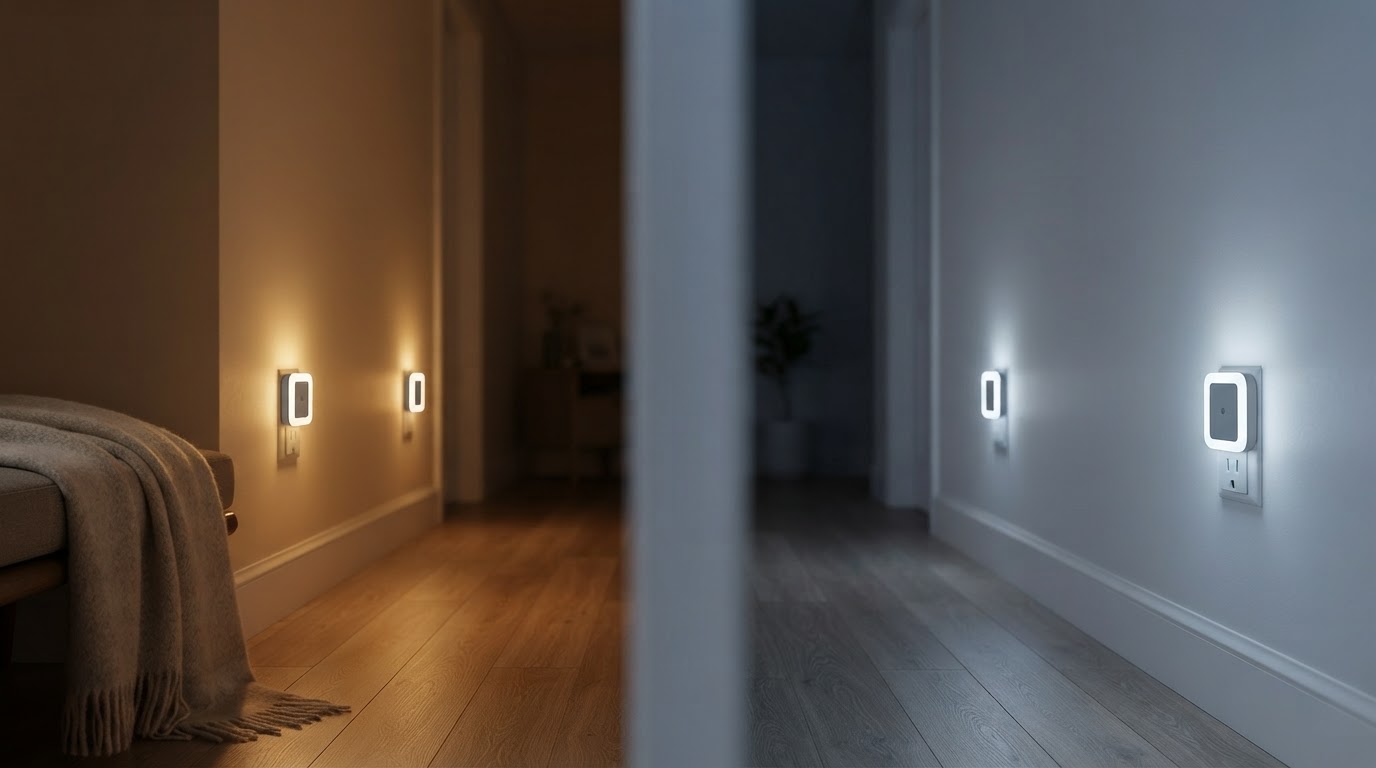
3000K Warm White vs Daylight LEDs for Nighttime Use: A Comparison
Spectrum Breakdown: 3000K Warm White vs 6000K Daylight
When evaluating night illumination, color temperature plays a pivotal role. Daylight LEDs (5000K–6500K) emit high amounts of blue spectrum light designed to promote alertness. Conversely, 3000k warm white fixtures emit gentle light, providing ambient brightness without signaling morning wakefulness to the brain. Discover deeper insights on circadian health in the main guide.
Impact on Sleep Latency and Night Vision

Photo by Mitzi Mohana on Pexels
Using daylight LEDs during mid-night bathroom visits forces pupillary constriction and suppresses melatonin production. In contrast, a 50 lumen warm light preserves dark adaptation. The lower intensity keeps your body in a restful state, reducing the time required to fall back asleep after returning to bed.
Energy Consumption and Practical Usability
Photo by Nazila Azimzada on Pexels
Modern 3000K night lights are engineered for high efficiency. Operating at just 0.5 watts, if lights up to 7hrs each day, energy consumption totals only 0.7 Kwh per year. Equipped with a built-in sensitive light sensor, a Dusk to Dawn Sensor Night Light automatically turns on at dusk and off at dawn, delivering automatic night illumination superior to standard daylight bulbs.
Read the full guide: The Complete Guide to How Warm White Light Impacts Sleep Quality