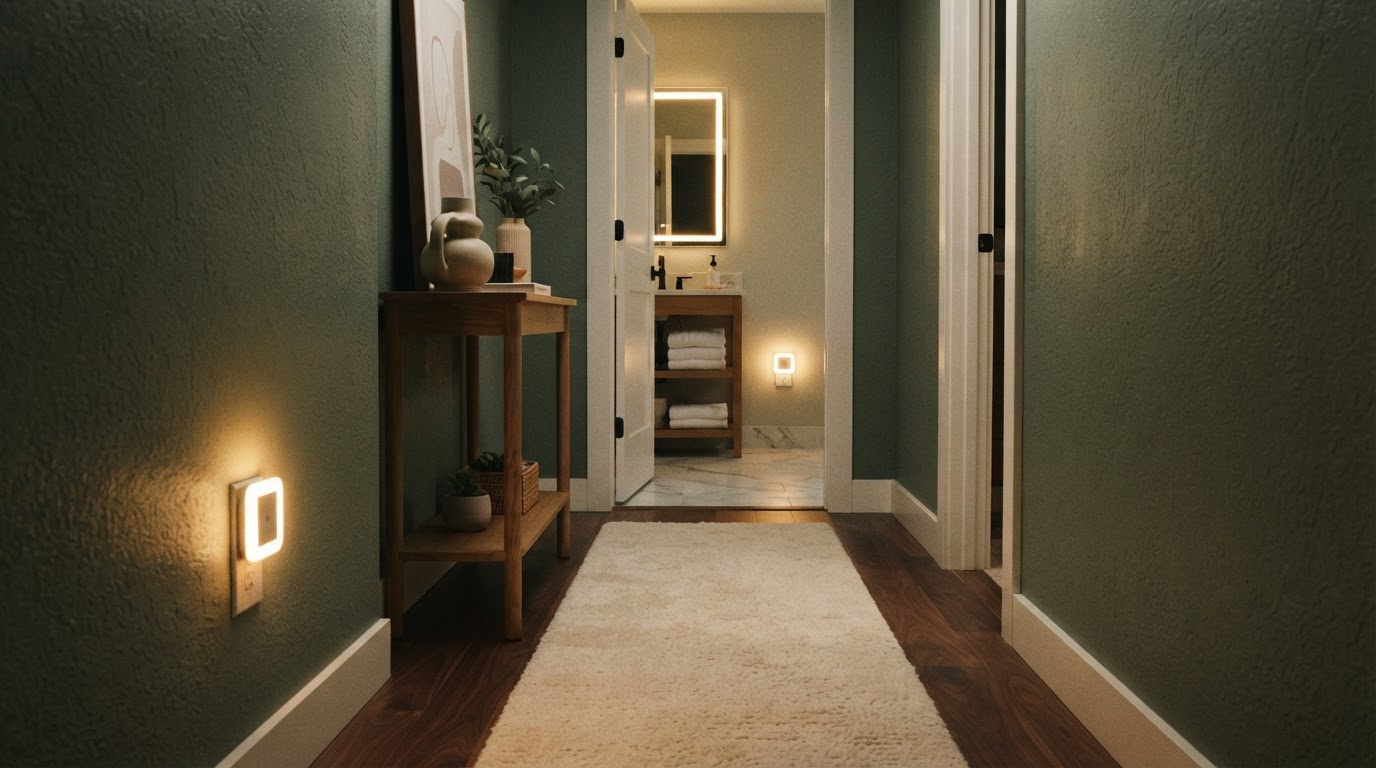
How to Optimize Your Hallway and Bathroom Lighting for Nighttime Safety
Step 1: Audit High-Traffic Nighttime Pathways
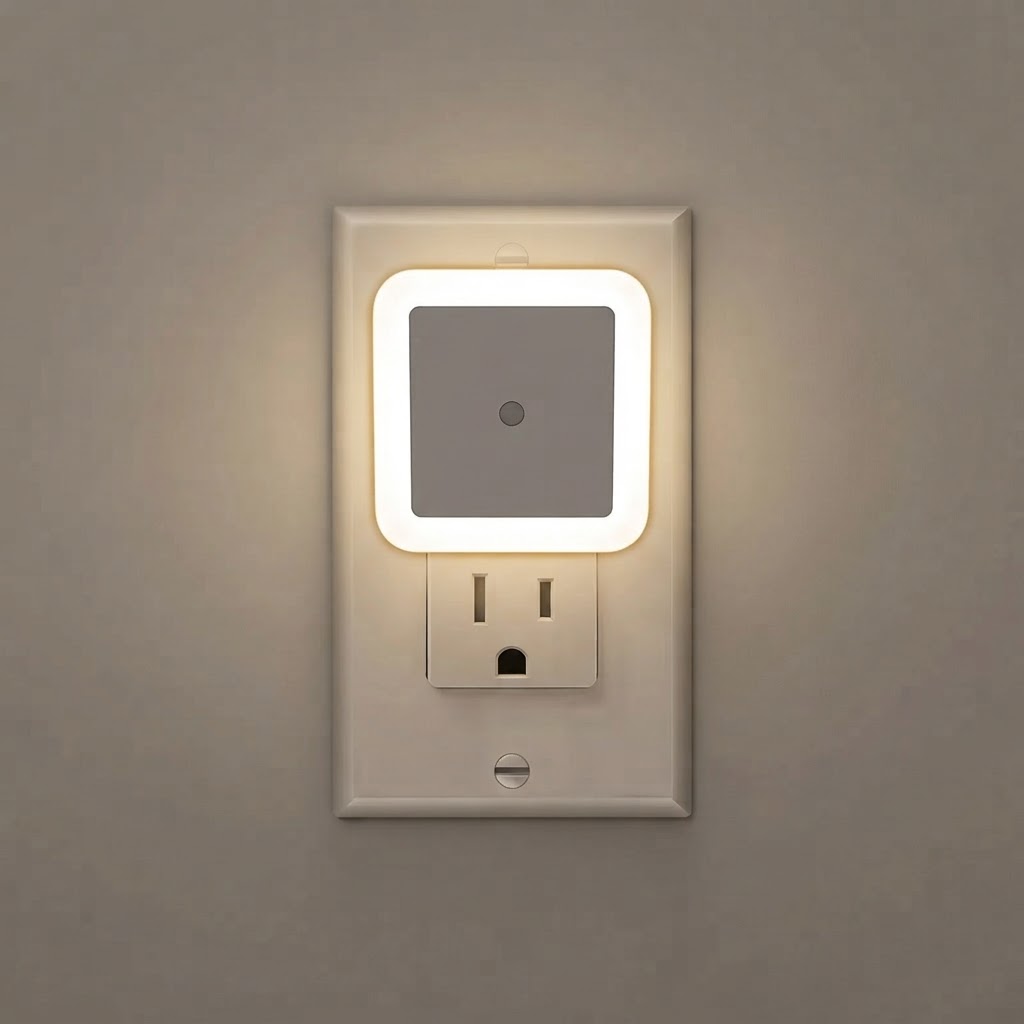
Identify key routes traversed after dark, specifically paths connecting the bedroom to the hallway, bathroom, kitchen, or living room. Ensure obstacles are cleared and target outlets are selected. To learn more about how light temperature protects rest, refer to the main guide.
Step 2: Position Low-Profile Warm White Plug-Ins
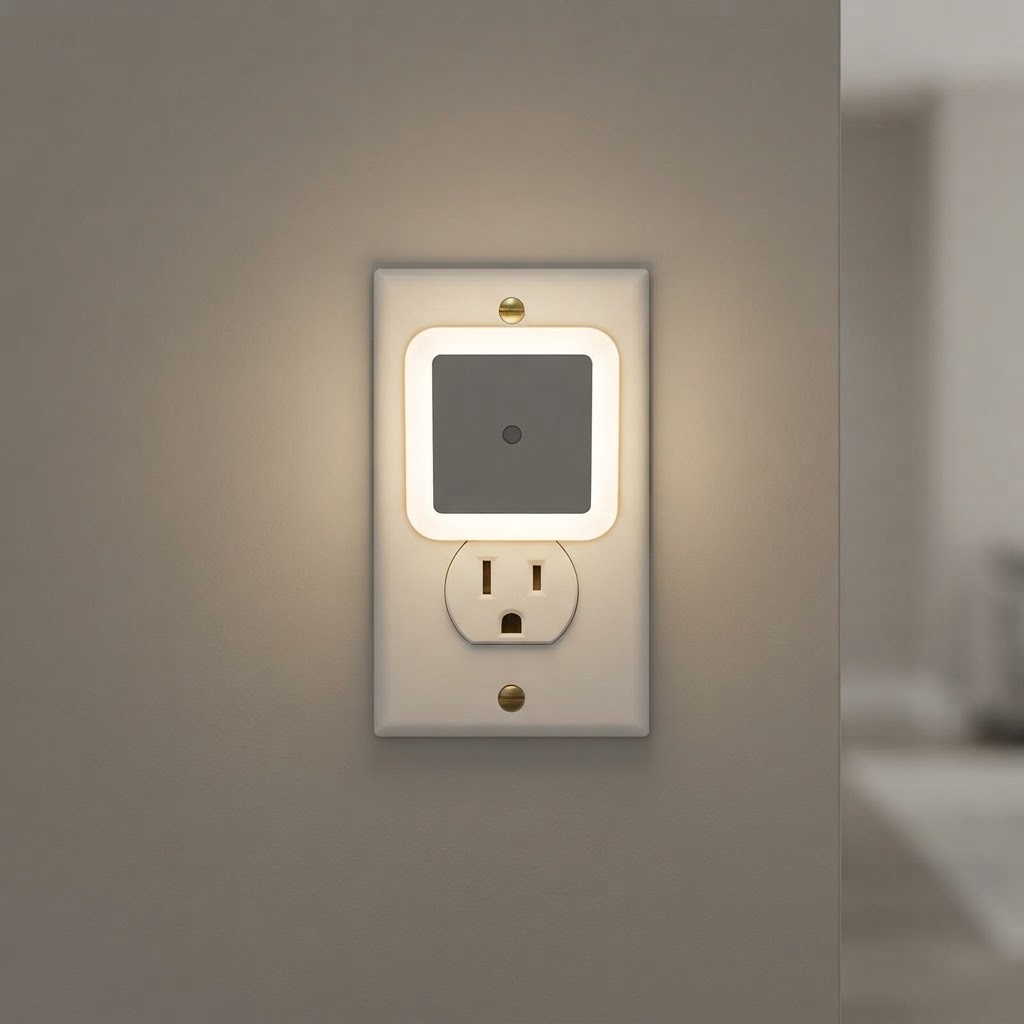
Select lower wall outlets along your pathway. Install low-energy fixtures, such as a 6 Pack Warm White Night Light. Choose a design that takes the space of only one plug, allowing you to plug another device into the outlet simultaneously without blocking lower sockets.
Step 3: Automate with Light Sensors
Utilize a Dusk to Dawn Sensor Night Light equipped with a built-in sensitive light sensor. The nightlight automatically turns on at dusk and off at dawn, providing effortless guidance while using minimal power (0.5 watts, consuming only 0.7 Kwh per year if lit up to 7hrs each day).
Step 4: Test Luminance and Eye Comfort
Walk the path in complete darkness. The 50 lumen output should provide adequate ground visibility with gentle light that does not provoke squinting or disrupt your groggy state.
Read the full guide: The Complete Guide to How Warm White Light Impacts Sleep Quality