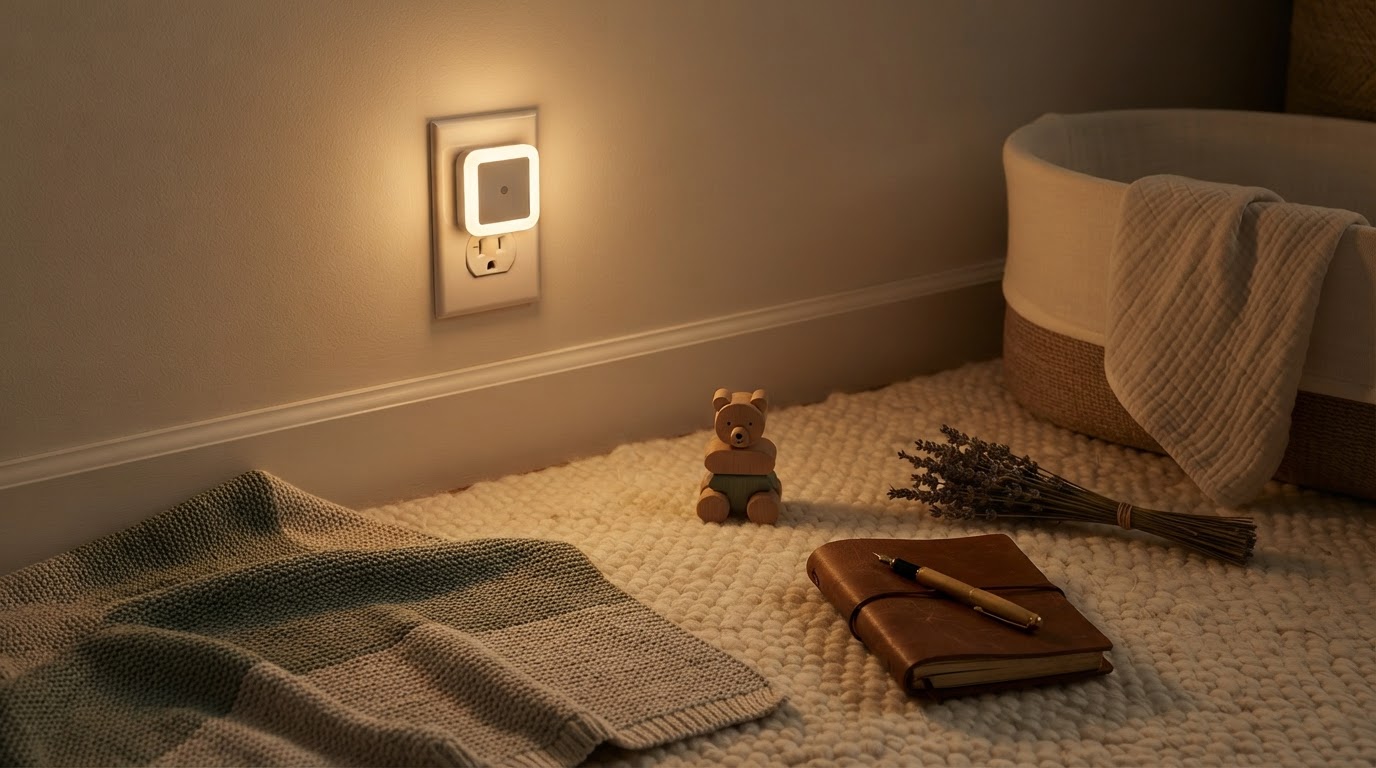
Soft Glow Nights for Newborn Nursery Environments
 Priya RamanSenior Analyst
August 5, 2026. This analysis evaluates the implementation of low-stimulus illumination strategies to support infant circadian development. It is designed for parents and caregivers seeking to optimize nighttime care environments without disrupting physiological rest cycles.
To understand nursery illumination, think of it as a matrix of intensity and color temperature. The primary challenge in a newborn’s room is the transition between total darkness and the illumination required for feeding or changing. According to Residence Supply, soft, diffused light is generally preferred to prevent harsh shadows and glare that may disturb a baby's sleep or playtime. When a caregiver introduces high-intensity overhead lighting at 2:00 AM, it triggers a cortisol response in the infant, effectively resetting their internal clock and making a return to sleep significantly more difficult. This biological sensitivity necessitates a shift toward ambient nursery lighting for newborns that prioritizes diffusion over direct beams. The goal is to provide enough visibility for safety while keeping the infant in a semi-somnolent state. High-contrast environments—where bright spots meet deep shadows—can also be visually overstimulating for developing eyes. By smoothing these transitions, caregivers can maintain a more consistent sleep-wake cycle, which is foundational for long-term developmental health and parental recovery.
Soft Glow Nights addresses these environmental requirements by focusing on the lower end of the Kelvin scale and the elimination of flicker. Two axes matter here: spectral output and spatial distribution. A warm white nursery night light serves as a critical tool in this framework because it minimizes blue light exposure, which is known to suppress melatonin. The selection of warm white nursery night light options ensures that the light emitted falls within the long-wavelength spectrum, often appearing as soft ambers or pinks. As noted by Happiest Baby, considering duller or pink bulbs for nightlights and ambient lighting can enhance relaxation and sleep. Furthermore, the physical placement of these light sources contributes to the overall efficacy of ambient nursery lighting for newborns. By utilizing low-profile LED strips or strategically placed diffused lamps, the light remains below the infant's direct line of sight while they are lying in a crib. This spatial management prevents the "glare effect" that often occurs with traditional table lamps or ceiling fixtures. The decision rule: if the light source creates a sharp shadow on the wall, the diffusion is insufficient for a newborn environment.
Once you see it this way, selecting nursery hardware becomes a matter of technical alignment rather than aesthetic preference. The decision framework for nursery lighting should prioritize the biological needs of the newborn over decorative trends. Members of the Homemaking Tips community have observed that LED strips and red-toned lights are popular safe options for baby nurseries to maintain a calm atmosphere. When auditing a space, caregivers should evaluate each light source against a specific safety and utility checklist to ensure it meets the standard for ambient nursery lighting for newborns.
- Verify the Kelvin rating is below 3000K to ensure a warm, sleep-supportive hue.
- Confirm the light source is dimmable to at least 10% of its maximum output.
- Ensure all cords and power sources are secured and out of reach of the crib area.
- Check for flicker-free LED technology to prevent subconscious visual fatigue.
- Assess the diffusion material to ensure no hot spots or direct bulb visibility.
- Prioritize red or amber spectrums for mid-night diaper changes and feedings.
Sources

Photo by Matheus Bertelli on Pexels
- Baby safe ambient night light ideas for nursery
- The Importance of Proper Lighting in a Nursery
- 31 Bright Ideas for Nursery Lighting