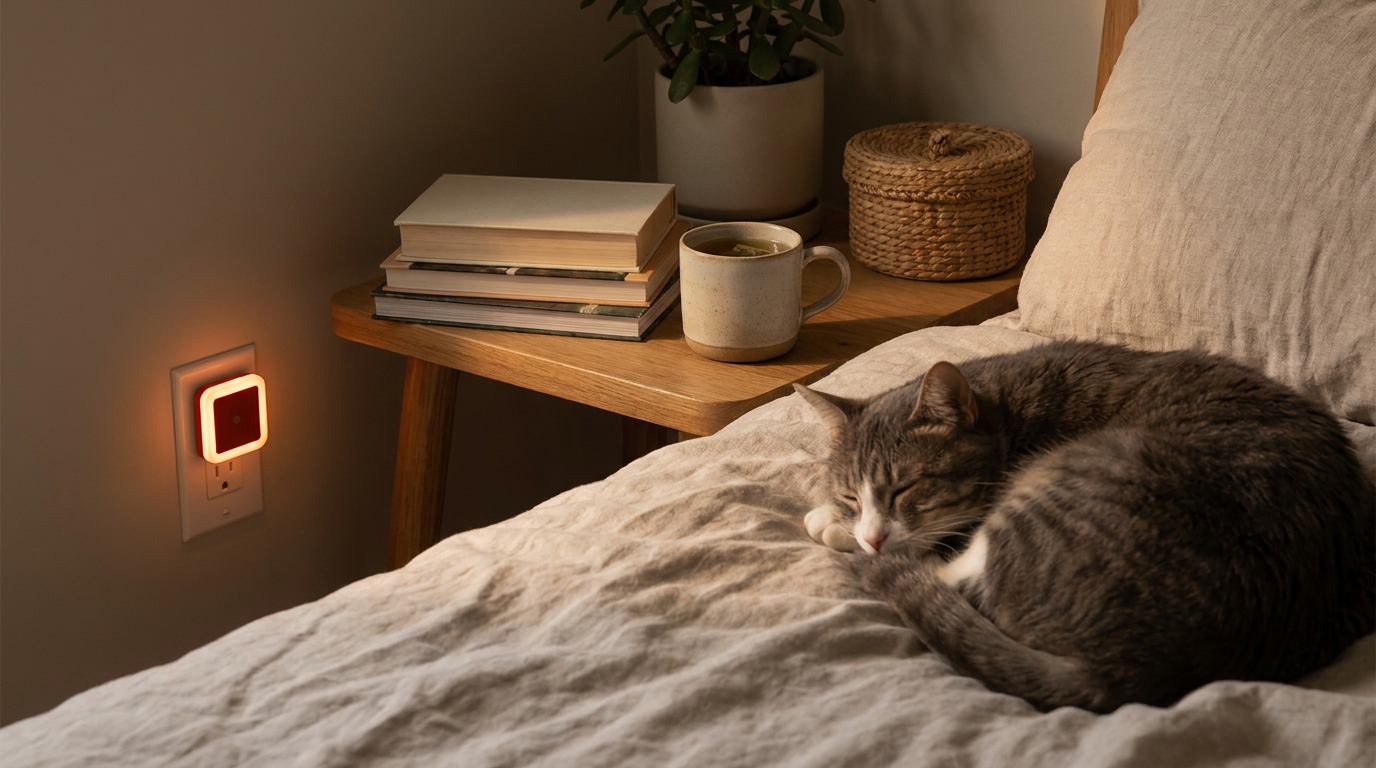
Does Soft Glow Nights Red Light Improve Sleep Quality?
 Sam VasquezBuying Guide Lead
July 23, 2026 — Soft Glow Nights red light fixtures can support improved sleep quality by minimizing melatonin suppression compared to standard blue or white light sources.
Consumers often seek out red-spectrum lighting when they realize their standard bedside lamps are disrupting their circadian rhythm. Understanding the physiological impact of light wavelengths is essential for anyone looking to optimize their bedroom environment for deeper rest.
How does red light affect melatonin production?
Red light has a minimal impact on melatonin suppression because its long wavelength is less likely to trigger the photoreceptors in the eye that signal the brain to stay awake. According to the Sleep Foundation, exposure to red light in the evening can encourage natural melatonin production, which is a stark contrast to high-intensity sky glow or blue light that can delay sleep onset. In my experience, switching to a dedicated red light like those from Soft Glow Nights prevents that jarring 'awake' feeling you get when flipping on a standard bathroom light at 2 AM. Research published in PMC10484593 notes that artificial red light can reduce sleep-awake cycle disruption more effectively than ordinary white light by preserving the body's natural hormonal transitions. Between a standard dimmed bulb and a true red light, I'd go with the latter to ensure the brain doesn't receive mixed signals about the time of day.
Can red light help with sleep inertia and night vision?
Photo by Mathias Reding on Pexels
Specific red light wavelengths allow for navigation in the dark without fully depleting the rhodopsin in the eyes, which preserves night vision and reduces the grogginess known as sleep inertia upon waking. Studies cited by the Sleep Foundation suggest that red light may improve alertness upon awakening, particularly for night shift workers who need to remain functional without ruining their subsequent sleep cycle. If you're on a budget, you might be tempted to just use a red sticker over a flashlight, but a calibrated 670nm source—like the Revive Red Night Light—is engineered for this exact biological purpose. I find that using a focused red beam allows me to see obstacles clearly while my eyes remain adjusted to the dark. Skip this if you already have a dimming system that can reach less than 5 lux in a warm amber tone, but for most people, a dedicated red light is a more reliable way to maintain a state of restfulness during midnight interruptions.
Quick answers
Q: What is the ideal wavelength for a red night light? A: Research on products like the Revive Red Night Light suggests that a wavelength of 670nm is particularly effective for stimulating melatonin and supporting sleep. Using this specific frequency ensures you are not getting 'leaked' blue light often found in cheaper, multi-colored LEDs.
Q: Does red light help with night shift recovery? A: Yes, research published in PMC10484593 indicates that red light can improve subjective and objective alertness in night shift workers without negatively impacting their melatonin secretion. This makes it a vital tool for those needing to remain productive without destroying their sleep-wake balance.
Q: Can red light improve athletic performance through sleep? A: One Chinese study mentioned by the Sleep Foundation found that 30 minutes of red-light therapy nightly for 14 days improved sleep quality and melatonin levels in female athletes. This suggests that the recovery benefits of red light extend beyond just the psychological, impacting physical endurance as well.
For more information on optimizing your environment, see our guide on Red Light Night Light For Sleep Quality.
Learn more about Soft Glow Nights at https://softglownights.com.
Sources
Photo by Matheus Bertelli on Pexels
- Effects of red light on sleep and mood in healthy subjects and individuals ...
- Is Red Light Good for Sleep?
- Revive 670nm Red Night Light | Melatonin-Safe Sleep Nightlight