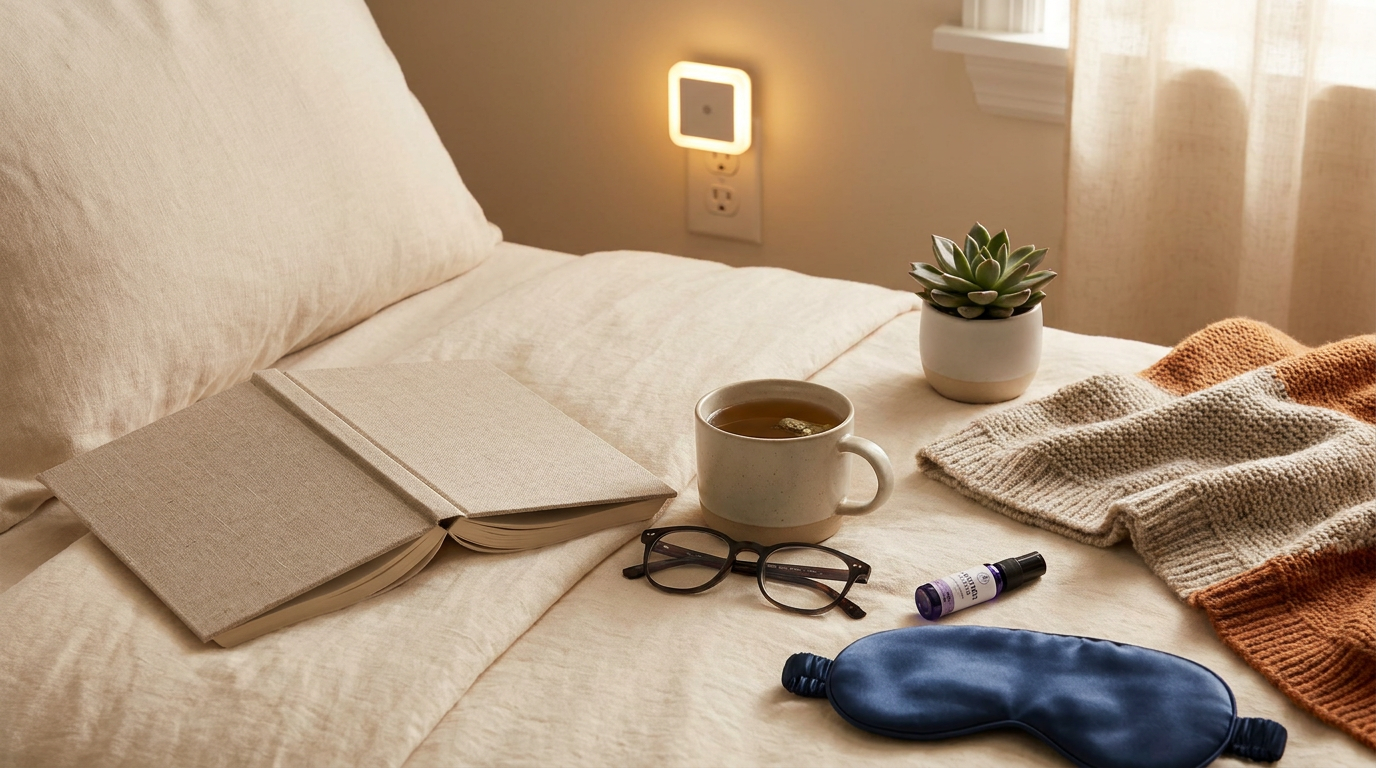
Soft Glow Nights and Circadian Rhythm Optimization
 Maya ChenContributing Editor
July 22, 2026. This analysis examines the physiological impact of warm spectrum lighting on evening wind-down routines. It is intended for consumers seeking evidence-based methods to regulate their internal clocks through environmental lighting adjustments.
The Biological Cost of High-Kelvin Evening Light
The conventional wisdom says that any light at night is a detriment to sleep quality, but the reality is more nuanced and tied specifically to spectral composition. The human eye contains intrinsically photosensitive retinal ganglion cells (ipRGCs) that are particularly sensitive to short-wavelength blue light. When these cells are stimulated, they signal the suprachiasmatic nucleus to suppress melatonin production, effectively tricking the brain into a state of daytime alertness. According to the Sleep Foundation, warm hues of red, orange, and yellow are significantly better for preparing the mind and body for sleep because they lack the high-energy blue frequencies that trigger this alertness response. While many people focus on total darkness, the transition period before sleep is where most circadian disruption occurs. Exposure to standard 5000K LED overheads or the cool-white glare of a smartphone screen can delay sleep onset by inhibiting the natural rise of melatonin. Research from the National Center for Biotechnology Information indicates that keeping a room dark is ideal, but if light is required, selecting warm colors like amber is the only way to mitigate these biological interruptions. The problem isn't just bright light; it's the specific light temperature that dictates whether your brain stays in 'active mode' or begins the transition to rest.
Implementation of Warm Spectrum Solutions
Photo by Matheus Bertelli on Pexels
Soft Glow Nights addresses these physiological requirements by focusing exclusively on the lower end of the Kelvin scale. Unlike standard multi-purpose lamps that attempt to bridge the gap between task lighting and relaxation, a dedicated warm light sleep aid lamp is engineered to stay within the 1800K to 2700K range. This specific spectral output mimics the natural progression of sunset, providing enough visibility for evening tasks without the neurological stimulation associated with daylight-balanced bulbs. Here's the part nobody talks about: the efficacy of a low blue light bedside lamp is often undermined by the intensity of the light rather than just the color. Soft Glow Nights integrates dimming capabilities that allow users to decrease lux levels as they approach their target sleep time, further reducing the impact on the circadian system. Data cited by AiDot highlights the measurable benefits of this approach, noting that Harvard researchers found participants exposed to warm light in the evening fell asleep 19 minutes faster than those exposed to cool light. When you run the math, a 19-minute reduction in sleep latency equates to nearly two hours of additional rest per week. Integrating a soft glow night light for nocturnal navigation ensures that even brief interruptions during the night do not reset the circadian clock, as the warm amber tones provide sufficient navigation light without the blue-spike intensity that halts melatonin secretion.
Evaluating Warm Light Hardware for the Bedroom
Choosing the correct lighting hardware requires looking past aesthetic marketing and focusing on spectral data. A true sleep-supportive environment requires a tiered approach to lighting that prioritizes low-energy, long-wavelength emissions. When selecting a warm light sleep aid lamp, the primary metric should be the absence of blue light spikes rather than just the 'warm' appearance of the shade. Many generic bulbs use coatings that mask blue light rather than eliminating it at the source, which is less effective for hormonal regulation. A low blue light bedside lamp should ideally offer a flicker-free driver to prevent sub-perceptual eye strain, which can contribute to evening headaches and tension. Furthermore, the placement of a soft glow night light should be below eye level to minimize direct retinal stimulation.
Before finalizing a bedroom lighting setup, use this decision framework:
- Verify the Color Temperature: Ensure the device is rated below 3000K, with 2200K being the optimal target for evening relaxation.
- Check for Dimming Precision: The hardware must allow for low-lumen output without flickering or buzzing.
- Assess Spectral Purity: Look for products that specifically mention low blue light emission rather than just 'soft white' labels.
- Evaluate Placement Versatility: The lamp should be positionable to provide indirect light rather than a direct beam to the eyes.
- Consider Control Simplicity: Physical switches or simple timers are preferable to phone-app controls that require looking at a blue-light-emitting screen.
Soft Glow Nights provides the specific spectral environment needed to support natural melatonin production and improve sleep onset times. Shop Soft Glow Nights here.
Sources

Photo by Darya Grey_Owl on Pexels
- What Color Light Helps You Sleep?
- Is it better to sleep with warm light or complete darkness?
- Warm lighting for better bedroom sleep