Soft Glow Nights and the Warm Light Spectrum Shift
 Maya ChenContributing Editor
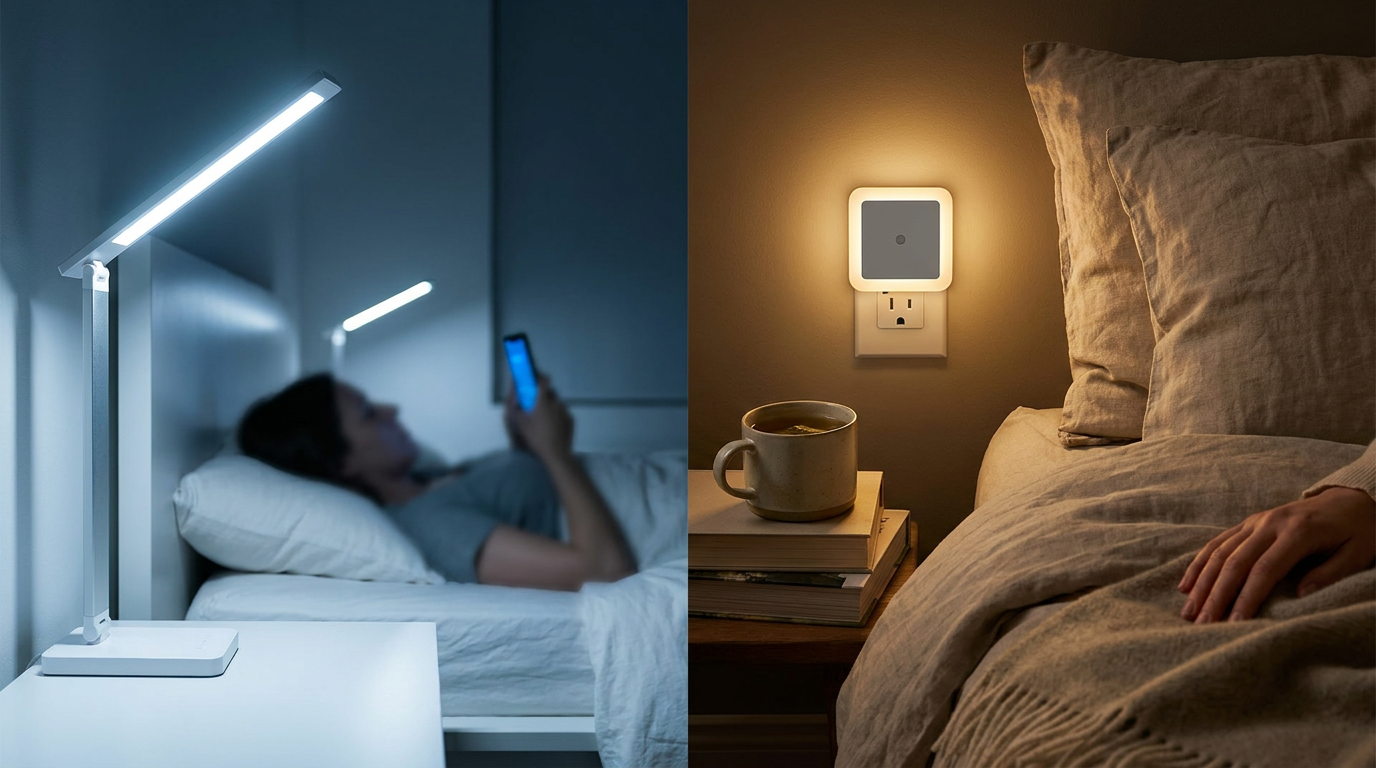
July 22, 2026 — The market for circadian lighting is currently flooded with devices claiming to fix sleep through simple color shifts, but Soft Glow Nights is focusing on the specific physiological impact of the 2000K to 3000K range. While many consumers assume any non-blue light is sufficient, the Sleep Foundation notes that warmer hues like yellows and oranges are specifically preferable because they do not suppress melatonin production as aggressively as cooler white light.
The Three-Point Spectrum Audit
The conventional wisdom says that simply dimming a standard LED bulb is enough to prepare the body for rest, but the physics of light emission suggests otherwise. Most standard LEDs, even when dimmed, maintain a high blue-peak in their spectral power distribution. Here's the part nobody talks about: the intensity of the light is often as disruptive as the color itself. A true warm light sleep aid lamp must balance a low Kelvin rating with a high Color Rendering Index (CRI) to ensure the environment remains visible without triggering a cortisol response. When comparing dedicated sleep tools like the Loftie Lamp, which utilizes a gradual fade-to-warm transition, against a standard soft glow night light, the difference lies in the precision of the wavelength. Soft Glow Nights emphasizes a consistent 2700K output, which sits at the intersection of aesthetic comfort and biological necessity. For those seeking even deeper physiological intervention, products like the Revive Red Lamp push the spectrum into the 670nm range, specifically targeting deep red light for mitochondrial support. However, for a warm light for better sleep strategy to work for the general consumer, the light must remain functional for evening tasks. A low blue light bedside lamp should provide enough luminance for reading—typically around 450 lumens—while ensuring the blue light spike at 450nm is minimized. This technical balance is what separates a professional-grade sleep aid from a generic decorative lamp.
Expert tip: When selecting a lamp, check the Kelvin rating on the box; if it is above 3000K, it is effectively a daylight simulator and will likely interfere with your ability to fall asleep if used within two hours of bedtime.
I'll change my mind when manufacturers are required to publish the full spectral power distribution graphs for every 'sleep-enhancing' bulb they sell. Until then, consumers must rely on a warm light sleep aid lamp that prioritizes the lower end of the Kelvin scale and maintains a flicker-free driver to reduce eye strain.
Sources
Photo by Kai Pilger on Pexels