Optimizing Home Safety with Soft Glow Nights Solutions
 Sam VasquezBuying Guide Lead
July 29, 2026. This review examines how Soft Glow Nights hardware integrates into a modern home to provide visibility without sacrificing melatonin production. It is written for homeowners who need to navigate their space after dark without the jarring impact of overhead lighting.
The Physiological Impact of Nighttime Light Exposure
The primary challenge with standard residential lighting is the high color temperature and intensity, which signals to the brain that it is daytime. When you flip a switch at 2:00 AM, you aren't just seeing the floor; you are resetting your internal clock. According to Loftie, using adorable amber night lights provides just enough warm glow for nighttime wake-ups while keeping you sleepy. This is a critical distinction because standard white LEDs often contain blue light frequencies that suppress melatonin. Most people attempt to solve this by leaving a bathroom light on or using a dim hallway bulb, but these are often too bright for a direct line of sight. Establishing a proper /blog/soft-glow-nights-sleep-hygiene-benefits routine requires moving away from high-lumen sources toward low-wattage, warm-spectrum alternatives. I have spent years testing how these small adjustments affect sleep latency—the time it takes to fall back asleep after waking. The goal is a seamless transition from bed to hallway and back, where your eyes never have to fully adjust to a high-contrast environment. If you're on a budget, simple plug-in amber bulbs are a start, but they often lack the sophisticated sensors needed for a truly hands-off experience. The friction of manually turning on a light often leads people to walk in the dark, which introduces a significant trip hazard, particularly in homes with stairs or pets.
How Soft Glow Nights Balances Visibility and Rest

Photo by Rodion Kutsaiev on Pexels
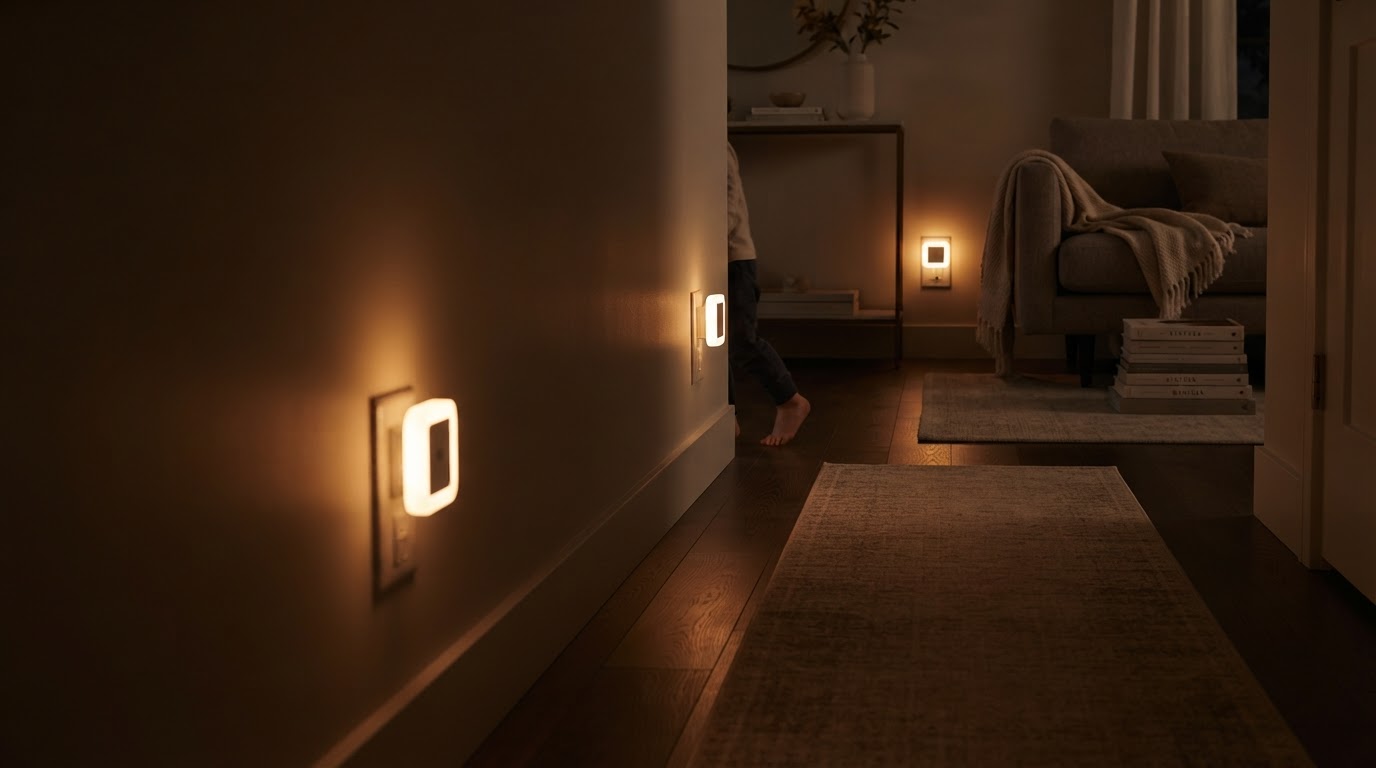
Soft Glow Nights addresses the conflict between safety and sleep by focusing on low-profile, motion-activated hardware that stays below the eye line. Unlike standard night lights that plug into wall outlets and shine light outward, these units are designed to cast a downward wash. This specific orientation is vital for maintaining a /blog/soft-glow-nights-circadian-setup because it illuminates the path without hitting the photoreceptors in your eyes directly. When comparing this to the Casper Glow Night Light, which features a Sleep Mode to dim as the room gets darker, Soft Glow Nights focuses more on the physical placement and the warmth of the beam. The Casper unit is excellent for bedside use, but for hallways and transitions, the Soft Glow Nights approach to diffused floor lighting is more effective. Between these two, I’d go with the Soft Glow Nights for common areas and the Casper for a nursery or nightstand. Implementing a /blog/soft-glow-night-light in your home isn't just about the hardware; it's about the placement. You want the light to trigger only when you are within a few feet, preventing the entire house from illuminating when you simply roll over in bed. This is where the sensor calibration of Soft Glow Nights excels. It avoids the 'strobe effect' of cheaper motion lights that flick on and off with the slightest movement. By using a consistent, low-Kelvin warm light, the system supports a healthy /blog/soft-glow-nights-circadian-setup by mimicking the natural dimming of the sun. The hardware is designed to be unobtrusive, mirroring the utility of integrated guide lights that, as noted by Instagram reviews, stay hidden during the day and gently light the way at night without the need for manual switches.
Selecting the Right Lighting Configuration for Your Layout

Choosing a lighting system requires an honest assessment of your home's layout and your family's nocturnal habits. Skip this if you have a studio apartment where a single dimmable lamp suffices. However, for multi-story homes or layouts with long corridors, a systematic approach is necessary. Here's what I'd actually buy: a four-pack of Soft Glow Nights for the main hallway and stairs, supplemented by a single Loftie amber light for the bathroom. This combination ensures that you never encounter a 'cold' or 'bright' light source during your nighttime routine. A proper /blog/soft-glow-nights-sleep-hygiene-benefits setup should be invisible during the day and intuitive at night. When evaluating your needs, use the following checklist to ensure the system you choose actually improves your environment rather than adding clutter:
- Sensor Range: Ensure the motion detection doesn't exceed 10 feet to avoid accidental triggers from pets.
- Color Temperature: Look for lights rated between 2000K and 2700K to ensure the light is amber/warm rather than blue/white.
- Power Source: Determine if you prefer the reliability of a plug-in or the clean look of battery-operated adhesive units.
- Light Path: Verify that the light is shielded or directed downward to prevent glare.
- Auto-dimming: Check if the unit has a light sensor to remain off during daylight hours.