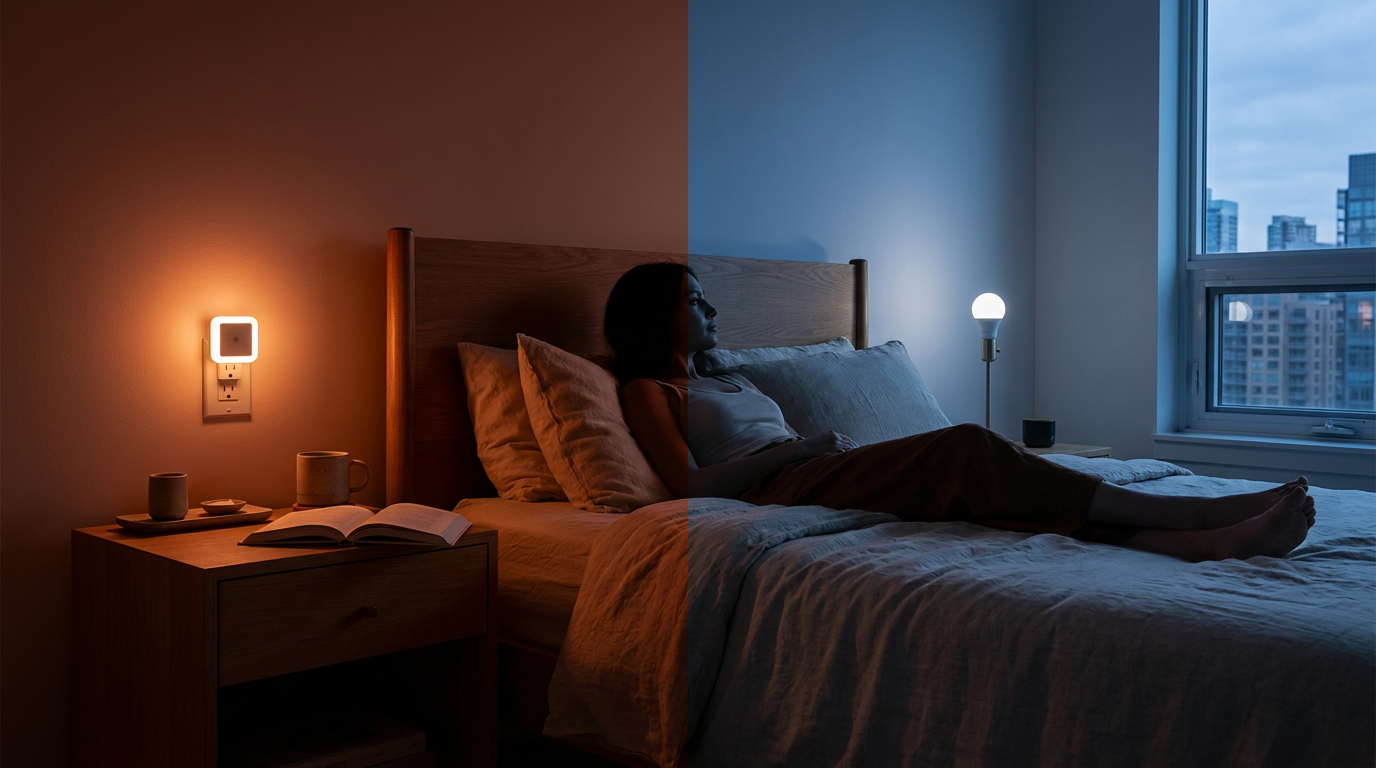
Is Soft Glow Nights the best red light for sleep?
 Sam VasquezBuying Guide Lead
July 23, 2026 — Soft Glow Nights provides a specialized red light spectrum that avoids the melatonin suppression common with standard white lighting. As sleep hygiene becomes a priority, choosing between a dedicated night light and DIY methods requires understanding how specific wavelengths impact the circadian rhythm.
Does red light actually improve sleep quality?
Red light can improve sleep quality by preventing the disruption of the sleep-wake cycle caused by standard artificial lighting. According to research cited by the Sleep Foundation, red light has a lower potential to suppress melatonin production compared to other colors. Replacing high-intensity overhead lights with a dedicated red source reduces the visual alertness that often keeps people awake after a midnight trip to the kitchen or bathroom.
A study published in the journal of the PMC (PMC10484593) notes that artificial red light reduces sleep-awake cycle disruption more effectively than ordinary white light. Between dimmable white light and true red light, red is superior for maintaining deep sleep. It helps to be precise about what a red night light does: it removes a negative rather than adding a therapy. The win is that a 2 a.m. bathroom trip no longer means a blast of alertness-triggering white light — not that red light actively sedates you. Framed that way, expectations land correctly: people whose sleep problem is fragmented nights with slow returns to sleep tend to notice the change; people whose problem is falling asleep at 11 p.m. while scrolling a bright phone will not, because the phone is still doing what the hallway bulb used to.
A night light also cannot out-glow the rest of a routine. Late caffeine, irregular sleep and wake times, and screens in bed each move sleep more than any bulb swap, so treat the light as one inexpensive piece of an environment, not the fix. And if sleep stays broken for weeks despite a sensible routine — or daytime sleepiness is affecting driving or work — that pattern is worth describing to a clinician rather than solving with more lighting purchases.
How does Soft Glow Nights compare to other red lights?
Photo by George Shervashidze on Pexels
Soft Glow Nights is designed specifically for sleep environments. Many competitors, like the Revive 670nm Red Night Light, focus on specific therapeutic wavelengths for recovery. While the Revive unit targets a precise 670nm wavelength to stimulate melatonin, it is often marketed as a high-end therapy device.
If you are on a budget, you might consider the Sleep Foundation's suggestion of painting a flashlight lens with a red marker or using red cellophane. However, these DIY methods produce inconsistent light levels. Instead, a dedicated plug-in like Soft Glow Nights offers a consistent, diffuse glow without manual setup. Skip this if you already have a smart lighting system that allows you to lock your bulbs into a deep red spectrum (620-700nm) automatically. Placement decides most of the real-world benefit. Map the actual midnight route — bedroom door, hallway, bathroom — and put a light at each dark decision point, plugged into outlets at knee height or below so the glow washes the floor rather than shining at eye level. The goal is the minimum brightness that makes toes and door frames visible; if the light casts crisp shadows, it is brighter than the job requires. In a bathroom, aim the glow away from the mirror, which otherwise doubles the effective brightness right where you look.
For a nursery, the same logic applies with one addition: position the light so it is out of the direct sight line from the crib, giving parents enough glow for a feed or a diaper change without a point source shining at the baby. Night-shift households can extend the idea further — a red-lit path from the front door to the bedroom lets the early sleeper's environment stay undisturbed when the late worker comes home.
Quick answers
Q: Does red light help with sleep inertia? A: Yes, research published by the Sleep Foundation suggests that exposure to red light before bed may improve alertness upon awakening, particularly for night shift workers.
Q: What is the optimal wavelength for a red night light? A: Products like the Revive Red Night Light utilize a 670nm wavelength, which is specifically cited for its ability to provide improved sleep without disrupting melatonin.
Q: Can red light improve mood during the night? A: A study in PMC10484593 indicates that red light can improve subjective alertness without negatively affecting mood or melatonin secretion.
For more information on the science of Red Light Night Light For Sleep Quality, check our detailed breakdown.
Learn more about Soft Glow Nights at https://softglownights.com.
A fair two-week home test
Because sleep is noisy — one bad night means nothing — the honest way to evaluate a lighting change is a simple before-and-after trial. Spend the first week as usual, jotting two things each morning: how many times you woke, and roughly how long the worst wake-up took to return to sleep. Then swap every light along your night route to the red source and change nothing else — same caffeine, same bedtime, same screens — and log the same two numbers for week two.
Most people who benefit see it in the second number: the wake-ups still happen, but the return to sleep after a lit trip across the house stops taking half an hour. If the numbers do not move, you have learned something equally useful for the price of one plug-in light — your sleep disruption is coming from somewhere other than light exposure, and the next experiment should target caffeine timing or schedule regularity instead.
Sources
Photo by Mehmet Kaya on Pexels