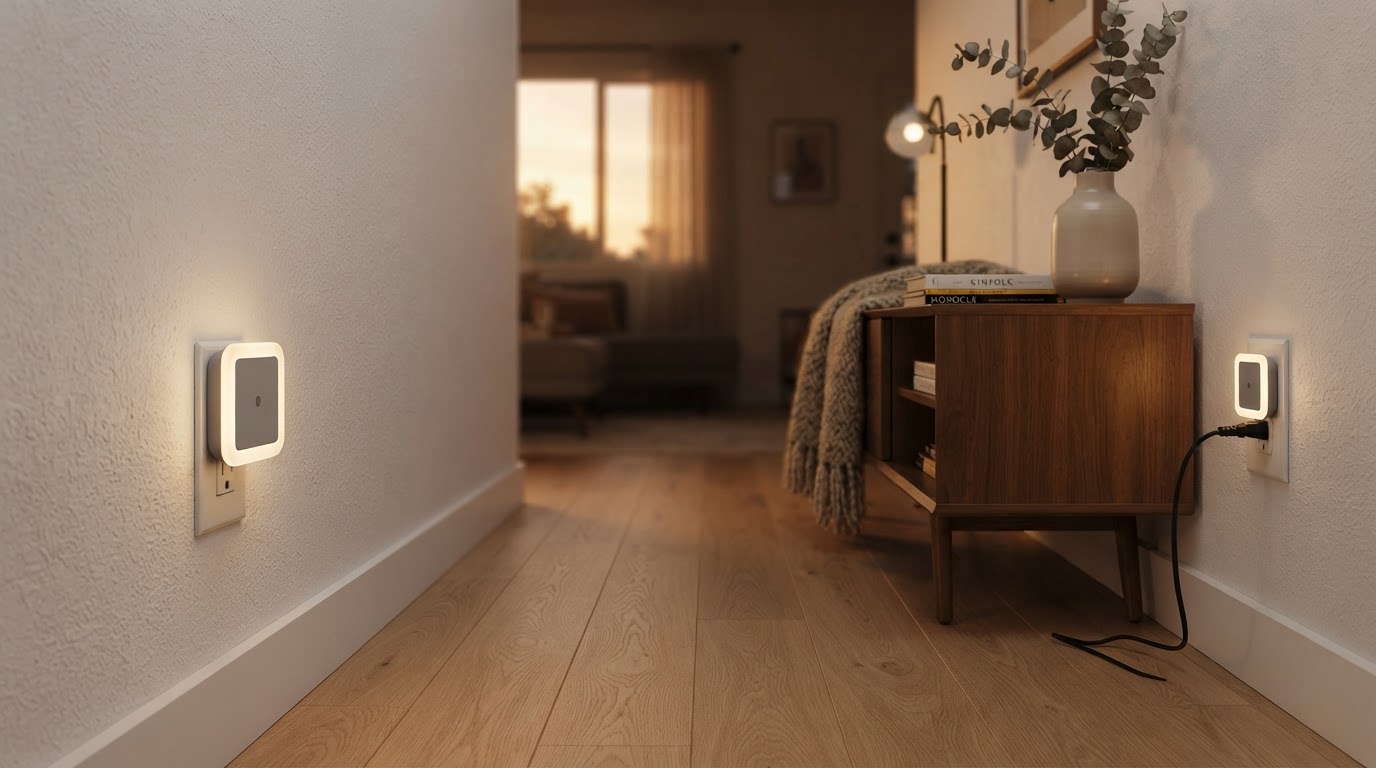
Soft Glow Nights and the LED Energy Savings Narrative
 Maya ChenContributing Editor
August 1, 2026 — The push toward LED adoption is often framed as a significant financial windfall for the average household. While the Soft Glow Nights 6-pack night light operates on a minimal 0.5-watt draw, the actual impact on a monthly utility bill is more about cumulative efficiency than a single-device revolution.
The conventional wisdom says that switching to LEDs is a primary driver of household wealth. According to the US Department of Energy, a home can save approximately $225 annually by transitioning to all LED lighting. However, for a single device like the Soft Glow Nights plug-in, which consumes only 0.7 Kwh per year when used for seven hours daily, the individual savings are negligible. The real value lies in the displacement of high-wattage incandescent bulbs. Palmetto reports that replacing one 60-watt incandescent bulb with a 10-watt LED can save $9.56 per year based on a national average rate of $0.1747 per kWh.
Photo by Kirill Moiseev on Pexels
Run the math: at 0.7 Kwh per year, a Soft Glow Nights unit costs roughly 12 cents annually to operate. This efficiency is bolstered by the built-in dusk-to-dawn sensor, which prevents the 50-lumen 3000k warm white light from drawing power during daylight hours. While this helps in optimizing home safety with Soft Glow Nights solutions, the financial benefit is a game of aggregates. Reliant notes that Texas homes specifically may save $50 to $100 per year by swapping out ten standard bulbs for LEDs.
When considering how to setup safe nighttime hallway lighting, the 3000k temperature is often cited for its lack of sleep disruption. This is a critical distinction, as blue light vs warm white night lights have vastly different impacts on circadian rhythms. Furthermore, users often prioritize the physical footprint; these units occupy only one plug, allowing for simultaneous device use.
Expert tip: To maximize the lifespan of LED sensors, ensure they are not placed directly opposite another light source. Constant flickering between 'on' and 'off' states can prematurely wear the circuitry, undermining the long-term savings promised by the 25,000 to 50,000-hour lifespan cited by the Department of Energy.
Whether these devices are placed in a top location for dusk-to-dawn night lights or used as a singular bathroom light, the energy draw remains flat. I'll change my mind when the cost of electricity rises to a point where a 0.5-watt draw represents a double-digit percentage of a standard utility bill.