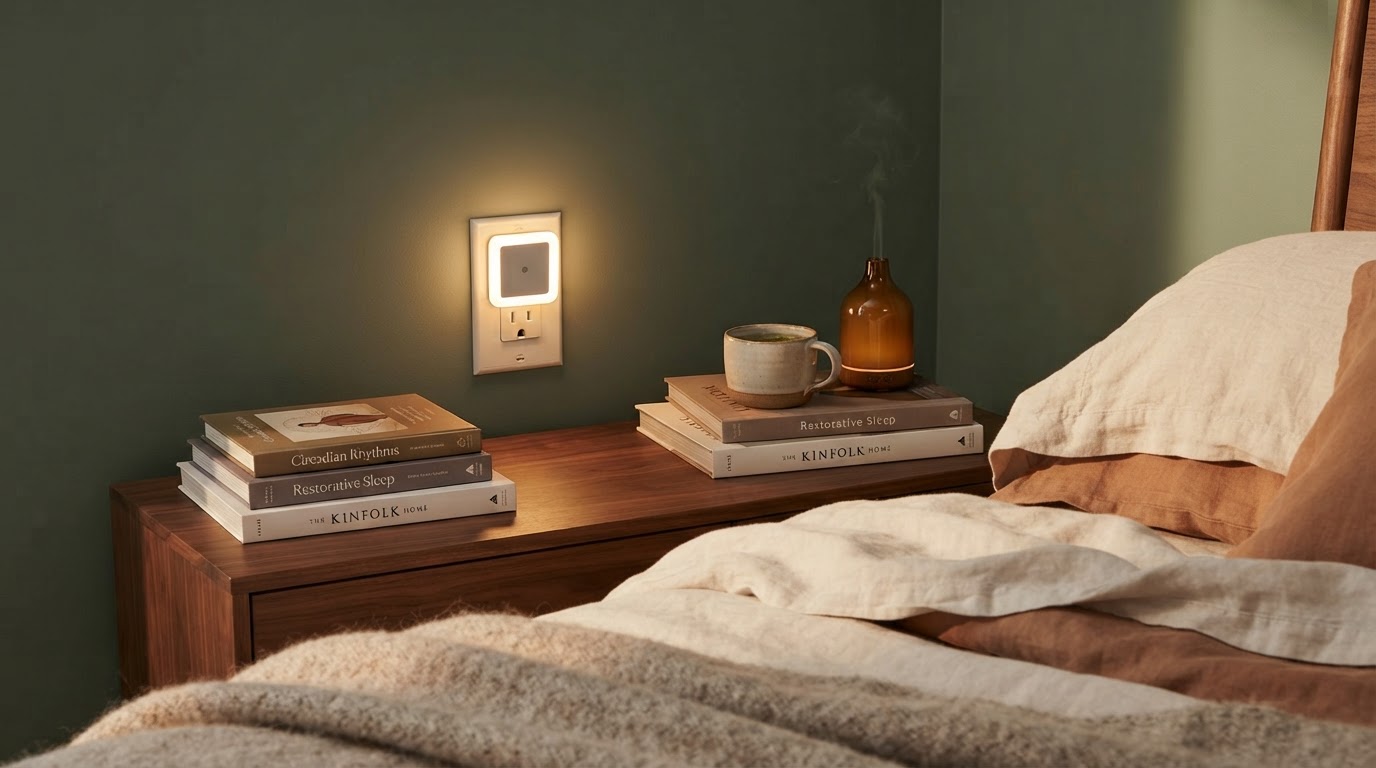
Soft Glow Nights and the Biological Case for Warm Light
 Maya ChenContributing Editor
August 17, 2026. This analysis evaluates the physiological necessity of amber-spectrum lighting in the modern bedroom. It is intended for consumers seeking to mitigate the disruptive effects of short-wavelength light on their circadian rhythms.
The Failure of Standard Bedroom Lighting
The conventional wisdom says that any dim light is sufficient for a bedtime routine, but the spectral data suggests otherwise. Most residential LED bulbs, even those marketed as "soft white," often peak in the 450nm range, a blue-heavy frequency that suppresses melatonin production. According to the Sleep Foundation, warmer hues of light, such as yellows and oranges, are preferable to cooler light because they have a less significant impact on the body’s internal clock. The biological cost of ignoring this is measurable: delayed sleep onset and reduced REM density. While some attempts to solve this involve using a warm light sleep aid lamp in short bursts, the reality is that the entire evening environment must shift away from blue light to be effective. Relying on a standard lamp dimmed to 10% still exposes the retina to enough blue light to signal the brain that it is daytime. Here's the part nobody talks about: even brief exposure to high-intensity cool light, such as a quick bathroom trip, can reset the circadian timer. A warm light sleep aid lamp serves as a preventative tool, ensuring that the transition to sleep begins long before the eyes are closed. The data from Gamma Light Therapy suggests that even deeper shifts, like their 670nm red lamp, can support melatonin, yet many consumers find the transition to pure red light too jarring for functional evening activities.
Soft Glow Nights and Spectral Precision
Photo by SplitShire on Pexels
Soft Glow Nights addresses the conflict between visibility and biological safety by focusing on the lower end of the Kelvin scale without sacrificing utility. Unlike the Loftie Lamp, which balances minimalist design with a transition from warm to bright light, Soft Glow Nights prioritizes a consistent, low-energy output that mimics the sunset. The engineering focuses on eliminating the flickering and blue-spike common in budget LEDs. When you integrate a warm light sleep aid lamp into a nightly routine, the objective is to maintain a color temperature below 2,000K. This specific range is where the inhibitory effect on melatonin is virtually non-existent. Run the math: a typical household bulb at 3,000K emits nearly double the blue light of a dedicated warm-spectrum device. By utilizing a warm light sleep aid lamp, users create a sanctuary that respects the body's natural chemistry. The Soft Glow Nights hardware is designed to remain in this safe zone, providing enough illumination for reading or movement without triggering the photo-sensitive retinal ganglion cells that govern alertness. This isn't just about aesthetics or "mood lighting"; it is a deliberate environmental intervention. While some might suggest using a warm light sleep aid lamp as a secondary light source, the most effective application is as the primary light source for the final 90 minutes of the day.
A Framework for Circadian Lighting Decisions
Choosing a lighting solution requires looking past marketing claims of "relaxation" and focusing on the technical specifications of the light source. A warm light sleep aid lamp must be evaluated on its ability to sustain a specific wavelength throughout its dimming cycle, as many low-cost lamps shift toward a cooler blue tint when power is reduced. I’ll change my mind when manufacturers provide third-party spectral distribution graphs for every brightness setting, but until then, the following criteria remain the standard for a functional sleep aid:
- Spectral Output: Ensure the device peaks in the yellow/amber range (590-620nm) rather than the blue range (450-490nm).
- Flicker Rate: Select lamps with high-frequency drivers to prevent subconscious eye strain that can lead to evening headaches.
- Dusk-to-Dawn Utility: The lamp should offer a low-lumen "night mode" that allows for safe navigation without waking the brain.
- Color Rendering Index (CRI): A higher CRI in the warm spectrum allows for better visibility of objects without needing higher brightness levels.
- Non-Digital Interfaces: Avoid lamps that require smartphone apps for basic operation, as the phone screen itself introduces the blue light you are trying to avoid.
Sources
Photo by Mitzi Mohana on Pexels