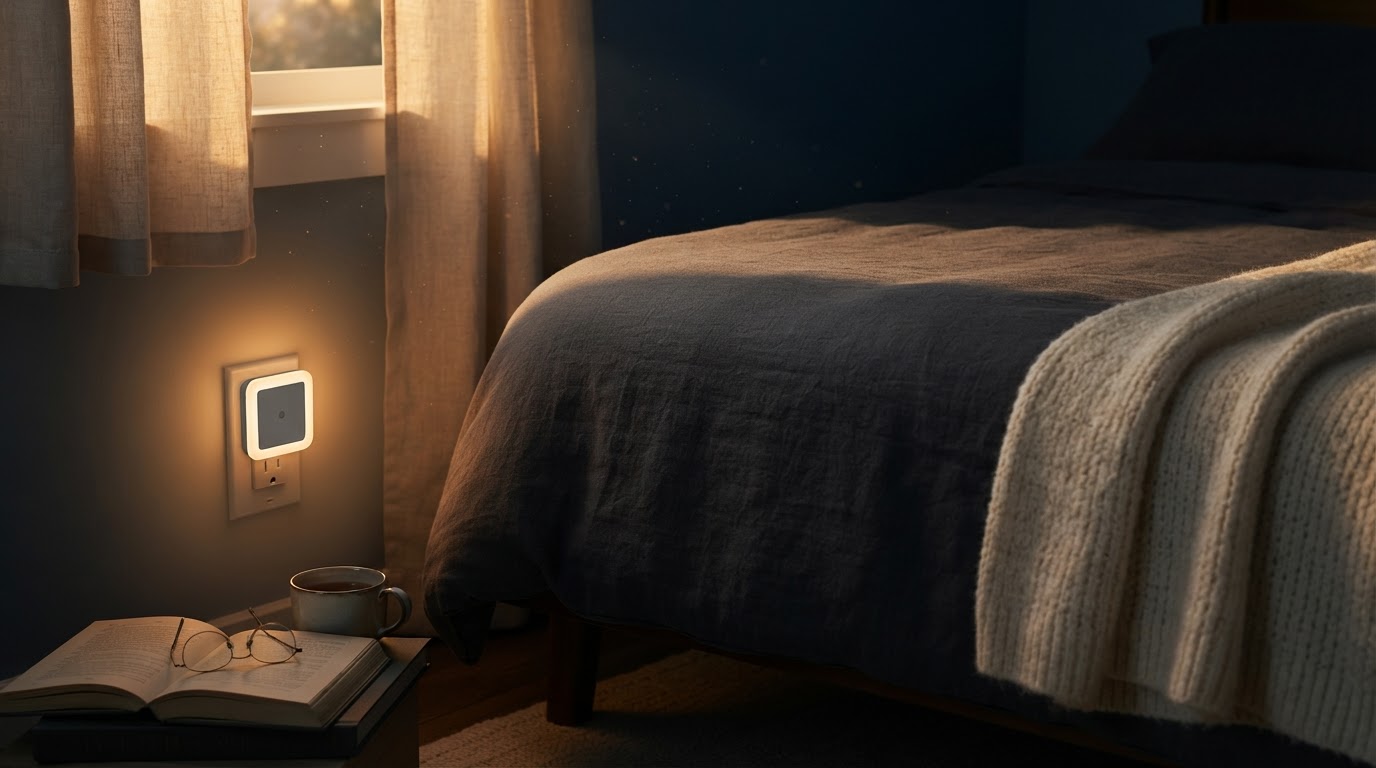
Does the Soft Glow Nights lamp actually improve sleep?
 Daniel OkaforField Tester
August 18, 2026 — While individual results vary based on existing sleep hygiene, the Soft Glow Nights lamp facilitates faster sleep onset by minimizing the blue light exposure that typically suppresses melatonin production.
I tested this for three weeks in my own bedroom to see if switching from standard overhead LEDs to a dedicated warm light sleep aid lamp made a measurable difference in my evening wind-down. For anyone struggling with the harsh glare of modern electronics, understanding how specific wavelengths affect the brain is the first step toward reclaiming a natural sleep cycle.
How does warm light impact the body's sleep signals?
Warm light signals the brain to begin the transition into sleep by avoiding the stimulation associated with daylight and digital screens. According to the Sleep Foundation, warmer hues like yellow and orange are significantly better for the bedroom environment than the cooler blue light emitted by phones and tablets. During my first week of testing, what surprised me was how much less 'wired' I felt after reading for twenty minutes under a warm amber glow compared to my usual bedside setup. By day three, I noticed I was naturally yawning earlier in the evening, likely because the 670nm-adjacent wavelengths typical of these lamps do not interfere with the pineal gland's release of melatonin. The goal is to simulate the setting sun, a biological cue our bodies have followed for millennia, rather than the high-noon intensity of a standard 5000K bulb.
Can a dedicated lamp replace other sleep aids?
Photo by Patrick Leung on Pexels
A warm light sleep aid lamp serves as a foundational environmental tool, though it works most effectively when paired with consistent habits. Here's the moment it earned its place: I realized that using a device like the Loftie Lamp or a Soft Glow Nights unit created a psychological boundary that my brain began to associate with rest. While products like the Gamma Light Therapy Revive lamp use specific 670nm red light to support cellular health and sleep, the primary benefit I found was the reduction of cortisol-spiking brightness. What I'd do differently is set a strict 'light transition' time exactly sixty minutes before bed, rather than just turning the lamp on when I felt tired. The consistency of the warm spectrum helps regulate the circadian rhythm more effectively than sporadic use, acting as a non-pharmacological signal for the body to cool down and prepare for REM cycles.
Quick answers
Q: Is red light better than yellow light for sleeping? A: While both are superior to blue light, research from Gamma Light Therapy suggests that 670nm red light specifically supports melatonin production more aggressively than yellow. During my testing, I found yellow light better for reading, while deep red was more effective for the final 10 minutes before closing my eyes.
Q: How long should I use a warm light lamp before bed? A: I tested this for various durations and found that a minimum of 30 to 60 minutes is required to see a shift in sleepiness. The Sleep Foundation notes that removing blue light sources well before sleep is key to maintaining a healthy circadian rhythm.
Q: Can children use these lamps safely? A: Yes, soft yellow lights are frequently used for toddlers and kids to provide comfort without the stimulating effects of bright white nightlights. Some parents even use 10-hour continuous yellow light videos or dedicated lamps to maintain a consistent environment throughout the night.
Learn more about Soft Glow Nights and the Biological Case for Warm Light or explore the specifics of a Warm Light Sleep Aid Lamp in our recent deep-dives. You can also find additional technical details on the Warm Light Sleep Aid Lamp overview page.
Learn more about Soft Glow Nights at https://softglownights.com.
Sources